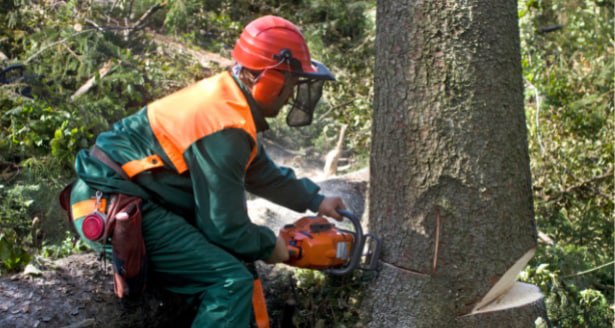
Overhanging branches are common in established gardens and do not automatically indicate that a tree has a problem. A healthy branch extending over a lawn or planting area may simply be part of the tree’s natural growth. However, when branches become damaged, excessively heavy, poorly positioned or too close to important parts of a property, professional attention may be advisable.
For homeowners in Ramsgate, Kent, recognising when an overhanging branch requires tree surgery can help maintain healthy trees while preventing avoidable problems around the garden. At Ramsgate Tree Surgeons, we assess the tree as a whole before recommending pruning, ensuring that any work is appropriate for its condition, structure and surroundings.
When the Branch Is Dead or Dying
Dead branches are among the clearest reasons to arrange a professional tree assessment.
Once a branch dies, it no longer develops in the same way as healthy living wood. As deterioration progresses, its structural reliability can reduce, particularly during windy weather.
Possible signs include:
- A lack of leaves during the growing season
- Brittle or peeling bark
- Visible cracks
- Dead twigs throughout the branch
- Fungal growth around damaged wood
- Sections beginning to break away
Professional deadwood removal can eliminate unsuitable branches while avoiding unnecessary cutting elsewhere in the canopy.
When a Branch Has Been Damaged
Branches can be damaged by strong winds, previous poor pruning or natural structural weaknesses.
A partially split branch may remain attached to the tree while becoming increasingly unstable. Damage can sometimes occur where the branch meets the trunk, making the problem difficult to assess from ground level.
Large damaged branches should be inspected by an experienced tree surgeon rather than simply being cut back at the most convenient point.
When Branches Extend Over Frequently Used Areas
The location of an overhanging branch matters just as much as its condition.
A substantial branch extending over an area that is regularly used deserves greater attention than one growing over an unused section of the garden.
Tree surgeons may assess branches positioned above:
- Driveways
- Garden paths
- Seating areas
- Lawns used regularly
- Entrances
- Garden structures
This does not mean every overhanging branch should be removed. Instead, its health, size, attachment and position should be considered together.
When Growth Is Getting Too Close to the Property
As trees mature, their canopies can gradually extend towards buildings and other structures.
Branches may begin brushing against roofs, gutters or walls, particularly during windy conditions. Smaller twigs and foliage can also contribute to debris accumulating around rooflines and drainage areas.
Selective pruning may provide enough clearance without substantially altering the natural appearance of the tree.
When a Branch Is Blocking Access
Overhanging growth can sometimes make parts of a garden difficult to use.
Branches extending too low across a path, driveway or entrance may interfere with normal access. In these circumstances, carefully planned pruning can provide appropriate clearance while retaining as much healthy growth as possible.
The aim should be to solve the practical problem without removing more of the canopy than necessary.
When the Branch Appears Unusually Heavy
Large lateral branches can carry considerable weight, especially when they extend a long distance from the main trunk.
The size of a branch alone does not necessarily make it unsafe. However, a heavily extended limb may deserve professional assessment where there are signs of poor attachment, cracks, previous damage or excessive end weight.
An experienced tree surgeon can assess the branch in relation to the structure of the complete canopy.
Weak Branch Unions Can Require Attention
Where two major stems or branches meet, the quality of their attachment is important.
Some unions can develop structural weaknesses as the tree grows. From ground level, homeowners may notice narrow forks, cracks or unusual movement, although determining the significance of these features requires professional knowledge.
Tree surgery may sometimes be used to reduce stress on vulnerable sections while preserving the tree wherever practical.
Overhanging Branches Can Affect Garden Space
Not every reason for pruning involves structural concerns. Mature branches can gradually dominate smaller gardens, reduce usable space or create excessive shade.
Careful pruning may help improve:
- Natural light
- Clearance around planting
- Access through the garden
- Canopy balance
- The relationship between the tree and surrounding space
The objective should be thoughtful management rather than simply cutting back every branch that extends beyond a preferred boundary.
Why Cutting the Branch Yourself Can Create Problems
Large branches are considerably heavier and less predictable than they may appear from the ground. Removing them incorrectly can also damage the tree itself.
Poor cuts may leave unnecessarily large wounds, damage the branch collar or cause sections of bark to tear away. Removing too much growth can also affect canopy balance and encourage undesirable regrowth.
Professional tree surgeons understand how and where branches should be removed to minimise unnecessary damage to the tree.
Sometimes Crown Reduction Is More Appropriate
If numerous branches are extending too far rather than one isolated limb causing the problem, repeatedly shortening individual branches may not produce a well-balanced result.
A professionally planned crown reduction may sometimes be more appropriate. This involves reducing the overall dimensions of the canopy while maintaining a natural shape and suitable branch structure.
Whether this is necessary depends entirely on the individual tree.
Early Attention Can Make Tree Management Easier
Waiting until an overhanging branch becomes severely damaged is not always the best approach.
Regular observation can identify changes while management options remain relatively straightforward. If a large branch has changed position, developed cracks or suffered storm damage, arranging an assessment can establish whether pruning is required.
Proactive tree care can also help established trees remain suitable for their surroundings as they continue to mature.
Why Professional Assessment Matters
Tree pruning should respond to a specific need rather than being carried out simply because a branch appears large.
At Ramsgate Tree Surgeons, we assess factors such as branch condition, attachment, canopy structure, tree health and proximity to surrounding features before recommending work. This allows pruning to be targeted where it provides a genuine benefit while retaining healthy branches wherever appropriate.
Professional assessment is particularly valuable for mature trees, where unnecessary cutting can affect a canopy that has taken many years to develop.
Conclusion
An overhanging branch may need attention when it is dead, damaged, structurally questionable, obstructing access or growing too close to frequently used areas and property features. However, not every overhanging branch needs removing. The correct approach depends on the health and structure of the tree as well as the location of the branch.
For homeowners in Ramsgate, Kent, Ramsgate Tree Surgeons provides professional tree assessments, pruning and comprehensive tree surgery services. If you are concerned about an overhanging branch or are unsure whether pruning is necessary, our experienced team can assess the tree and recommend appropriate work to keep it healthy, manageable and well suited to its surroundings.
Call us on: 01843 264695
Click here to find out more about Ramsgate Tree Surgeons
Click here to complete our contact form and see how we can help with your tree needs.